
.avif)



.avif)

.avif)
.avif)
.avif)


.avif)
.avif)



September 25, 2026


Global hiring software for a scaling startup has two jobs: paying contractors abroad, and employing one of them when the role becomes permanent.
This comparison covers six platforms on the second job, where they differ most: Deel, Gusto, Kleos, Oyster, Remote and Rippling. Each is compared on price, country coverage and whether the move happens on the same platform.
Some move the person in place. Others send you to a second provider at exactly that moment.
TL;DR
Prices checked on vendor pages, October 2026.
Global hiring and payroll software lets a company engage and pay people in countries where it has no entity. It comes in three models. Contractor management pays people who stay independent. A contractor-of-record signs with the contractor and takes on the classification risk. An employer of record becomes the legal employer and runs payroll, taxes and local compliance.
The usual path runs from the first model to the third, when a contractor becomes someone the company cannot do without.
When the relationship looks like employment in fact. Courts and tax authorities look at how the work is run, whatever the contract says: who sets the hours, whether the person works only for you, whether the role has an end date, and whether they work as part of your team.
California. Labor Code §2775 treats a worker as an employee unless the hiring company proves three conditions. The first is that the worker is free from its control "both under the contract and in fact."
United Kingdom. In Autoclenz Ltd v Belcher [2011] UKSC 41, the Supreme Court held that a written contract does not decide status if it does not match how the work is really done. Uber BV v Aslam [2021] UKSC 5 used the same reasoning to find drivers were workers despite contracts saying otherwise. (As of September 2026.)
Start with the contractor who has worked only for you, on your schedule, for long enough that nobody remembers the original scope. The seven features to check in global contractor management software cover how classification is handled before it gets that far.
Almost everything except the person and the work. The service agreement is replaced by an employment contract under local law. Taxes and social contributions move from the contractor's own filings to the employer's payroll. Termination follows local notice rules. Who owns the work by default changes from the first day of employment.
The conversion does not reach backwards. Code, art or designs produced while the person was a contractor stay under the contractor agreement, so that agreement needs its own assignment. How IP travels through a contractor platform covers what that assignment has to do in different countries.
Contractor time usually does not count toward seniority. In the UK, section 212(1) of the Employment Rights Act 1996 counts only weeks worked under a contract of employment. The exception is a contractor who was an employee in fact: then the clock may run from the start.
Deel, Kleos, Oyster, Remote and Rippling employ people abroad on the same platform where they pay contractors. Gusto pays contractors abroad itself and, since 1 May 2026, refers new customers hiring employees outside the US to Remote, where they onboard directly.
| Platform | Contractors | Employer of record | Contractor to employee |
|---|---|---|---|
| Deel | From $49 with the classification risk on you; contractor-of-record $325 per contractor per month | From $599 per employee per month; 150+ countries, owned entities in 130+ | Same platform |
| Gusto | Contractor payments in 120+ countries, risk on you | Through Remote, the legal employer | Since 1 May 2026, new customers open a separate account with Remote |
| Kleos | Contractor-of-record at $50 or €50 per payout, risk shifts to Kleos | From $200 per employee per month, depending on country; 200+ countries | Same platform |
| Oyster | $29 per contractor Coverage figures are not directly comparable. Providers count countries differently, and Deel itself publishes two numbers: 150+ countries covered and owned entities in 130+. Ask whether the provider employs people through its own company or a local partner in the specific countries you hire in. What does an employer of record cost as the team grows?Published employer-of-record fees run from $200 per employee per month at Kleos, depending on country and salary, to $699 at Oyster and Remote, with Deel from $599 and Rippling quoting per country. The fee sits on top of salary and employer contributions, and it multiplies with every hire: at ten employees, a $100 difference is $12,000 a year. The jump at conversion is the number to plan for. On Remote's published prices, moving one person from contractor management at $29 to employer of record at $699 adds $670 a month in platform fees before any change in salary costs. Fees also differ in what they include. Some providers sell employer of record as part of a wider HR system with leave tracking, documents and reporting. Others sell employment, payroll and compliance on their own. Check what the fee includes before comparing it. Published prices are a starting point. Ask for a quote on your actual countries and salaries before comparing. What does each global hiring platform offer for employees abroad?With the source page and date under each entry. DeelDeel is a workforce platform covering contractor management, contractor-of-record, employer of record and payroll. Contractors: contractor management from $49 per contractor per month, with the classification risk on you; contractor-of-record at $325, which shifts that risk to Deel. In 200+ countries. Employees abroad: employer of record from $599 per employee per month. Deel states it handles employment in 150+ countries and owns entities and its payroll engine in 130+. Contractor to employee: both products sit on the same platform. Sources: deel.com/solutions/payroll/eor and deel.com/solutions/payroll/contractors, checked 28 September 2026. Employer-of-record price as listed on Deel's pricing page in September 2026. 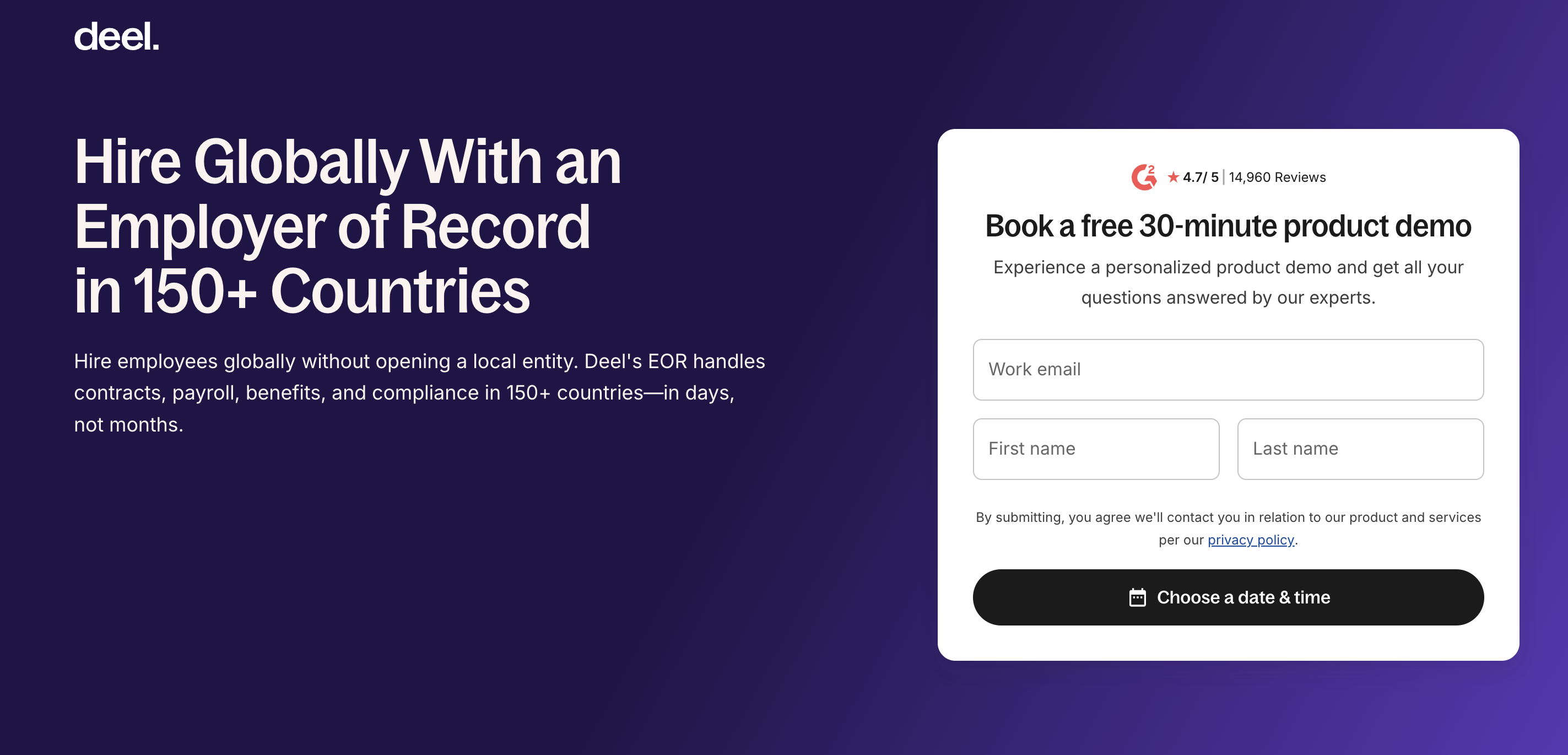 GustoGusto is a US payroll and HR platform for domestic employees, with contractor payments abroad. Contractors: contractor payments in 120+ countries, with the classification risk on you. Employees abroad: through its partner Remote, which is the legal employer. Since 1 May 2026, Gusto refers new customers hiring outside the US to Remote, where they onboard directly. Customers who used the integrated flow before that date keep it. Contractor to employee: for a new customer, converting a contractor abroad into an employee means opening a separate account with Remote, which then employs and pays that person. Source: support.gusto.com articles on hiring non-US employees, checked 28 September 2026. 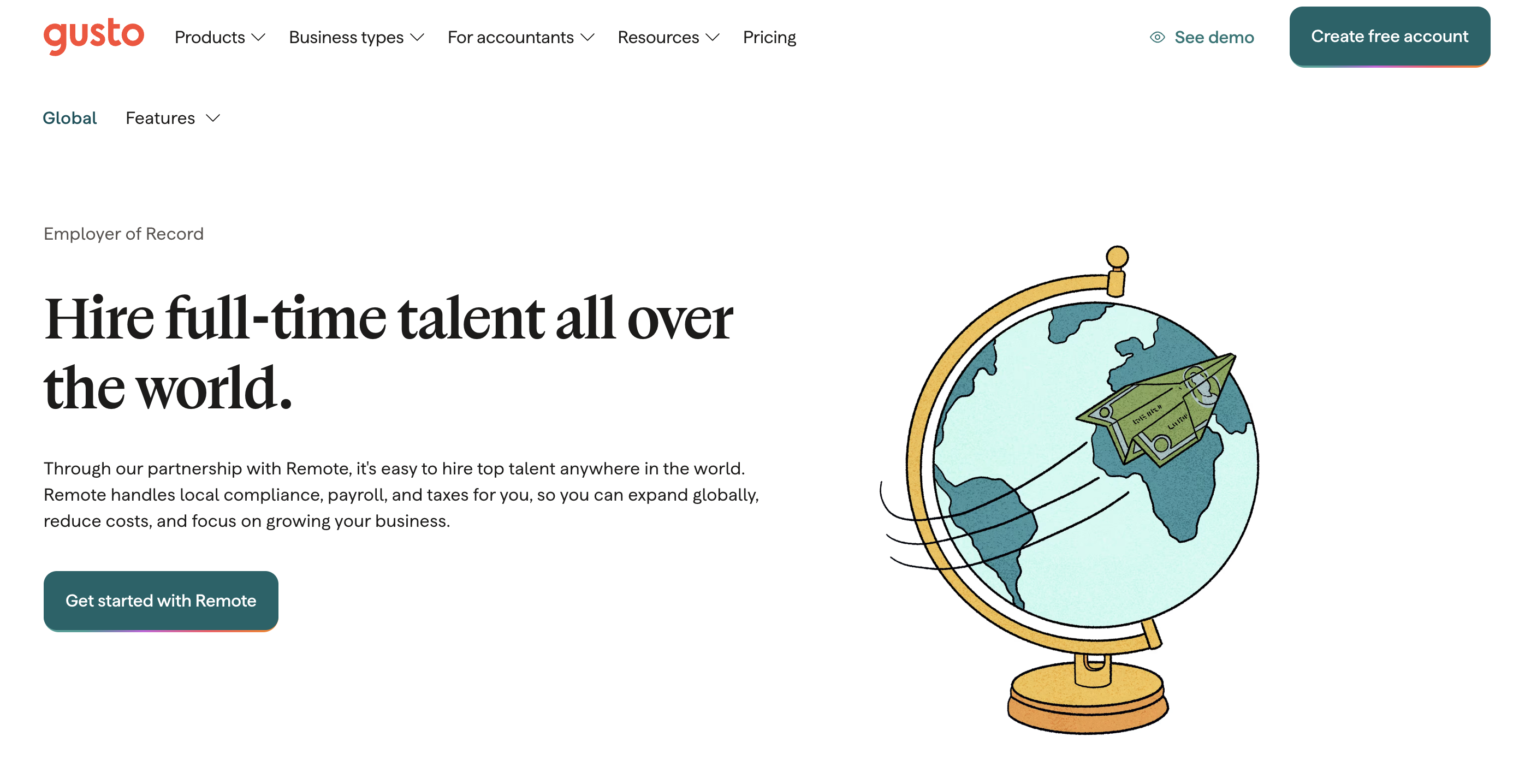 KleosKleos is a contractor-of-record and employer of record, with contractors and employees on the same platform. Contractors: contractor-of-record at $50 or €50 per payout, which shifts the classification risk to Kleos. Nothing is charged on the contractor side. In 200+ countries. Employees abroad: employer of record from $200 per employee per month, depending on country, in 200+ countries. Covers employment, payroll, taxes, benefits administration and local compliance. No setup fee or minimum term, and onboarding usually takes about five working days. Contractor to employee: both on the same platform. Kleos lists moving a contractor into employment as part of its employer-of-record service. Sources: kleos.io/solutions/employer-of-record and kleos.io/contractor-of-record, checked 2 October 2026.  OysterOyster is an employer-of-record and contractor platform, with a seat-based annual billing option for employer of record. Contractors: contractor management at $29 per contractor per month, with the first 30 days free, in 180+ countries. No contractor-of-record tier is listed on its pricing page, so the agreement with the contractor and the classification risk stay with you. Employees abroad: employer of record from $699 per employee per month, in 120+ countries. Contractor to employee: both products sit on the same platform. Sources: oysterhr.com/pricing and oysterhr.com/how-it-works/global-contractors, checked 28 September 2026. 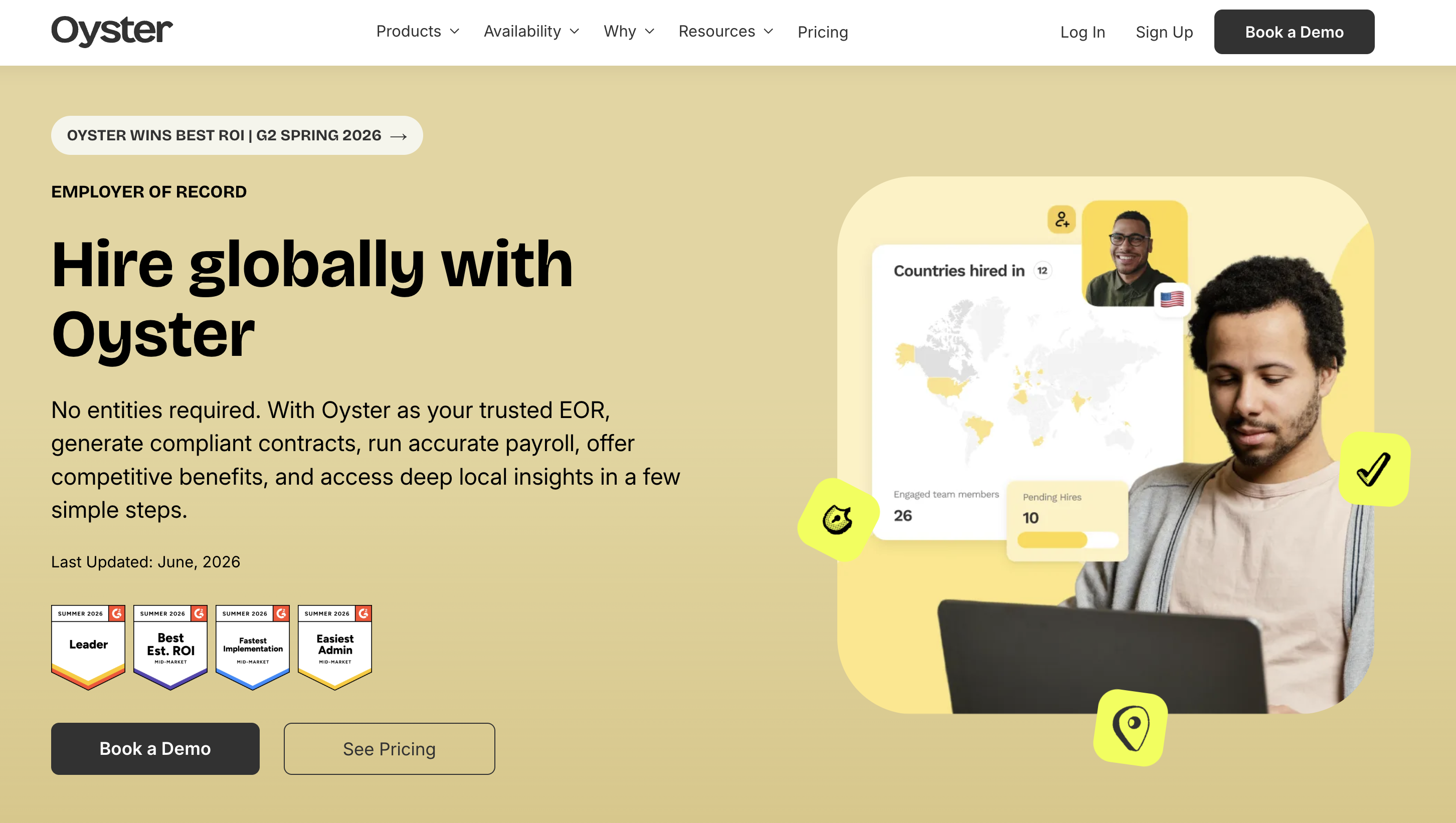 RemoteRemote is an employer-of-record and contractor platform. Remote states it owns all of its legal entities and does not rely on third parties to employ workers. Contractors: contractor management at $29 per contractor per month with the classification risk on you; Plus at $99 with cover of up to $100,000 per contractor for penalties; contractor-of-record from $325, which shifts the risk to Remote. Employees abroad: employer of record at $699 per employee per month, in 90+ countries. Remote is also the employer behind Gusto's international hiring. Contractor to employee: both products sit on the same platform. Sources: remote.com/pricing, checked 28 September 2026, and remote.com/global-hr/contractor-management, checked 11 September 2026. 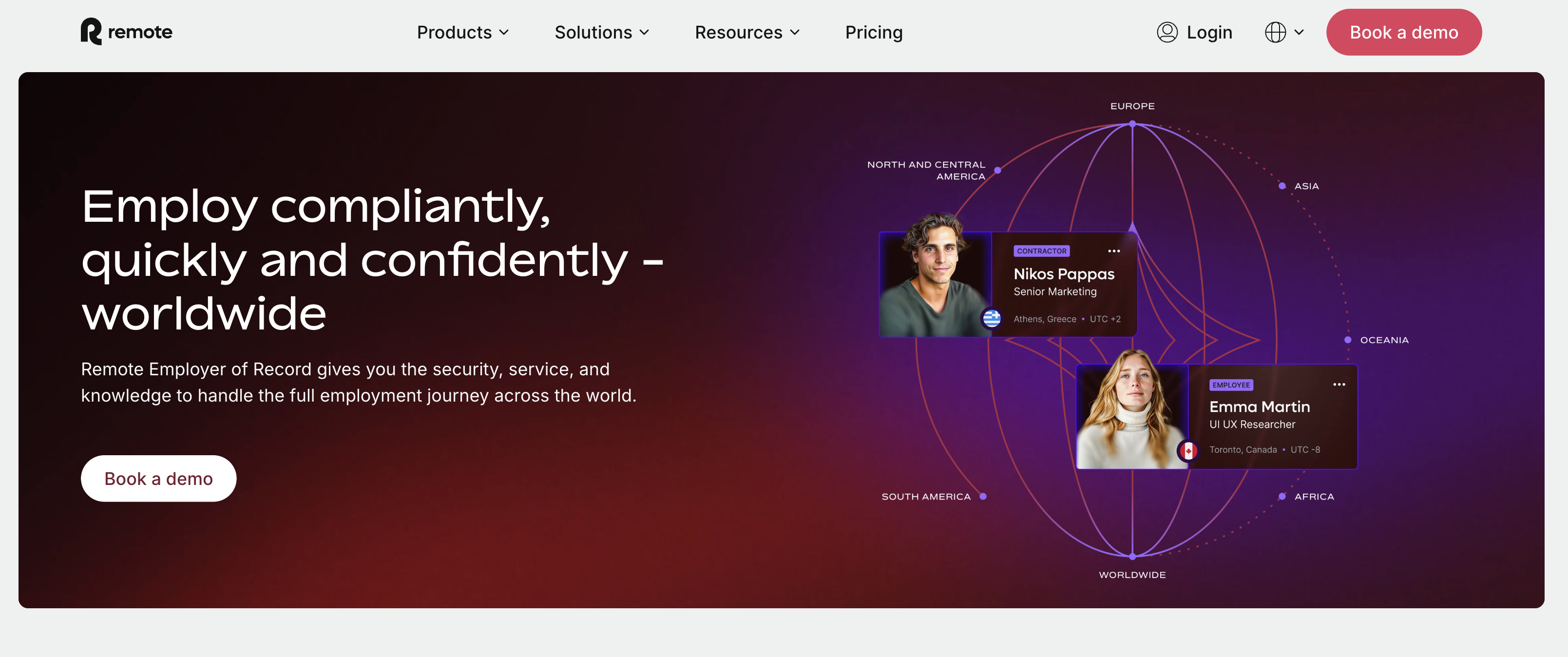 RipplingRippling is an HR, IT and payroll platform with employer of record as one module alongside its core HR system. Contractors: global contractors with the classification risk on you, and contractor-of-record, which shifts it to Rippling. Prices are quoted per contractor per country. Payroll and contractor payments in 185+ countries. Employees abroad: employer of record priced per employee per country on quote. Country coverage for employer of record is not stated on the pages checked. Contractor to employee: a contractor-to-employer-of-record path is listed as its own solution. If you later open an entity in a country, Rippling states it moves employer-of-record employees to direct hires without re-onboarding. Sources: rippling.com/products/payroll/employer-of-record, rippling.com/products/global/global-payroll-and-hiring and rippling.com blog on multi-country payroll, checked 28 September 2026.  What does onboarding an employee abroad involve?Employee onboarding abroad covers four things, each set by the law of the country where the person works: the employment contract, tax registration, social security enrolment and statutory benefits. It is more paperwork than onboarding a contractor, and in some countries the language of the contract itself is regulated. In France, article L1221-3 of the Labour Code requires a written employment contract to be in French, and an employer cannot rely on a clause to the employee's detriment if the contract breaches that rule. In Belgium's Dutch-speaking region, the Flemish Decree of 19 July 1973 requires employment documents in Dutch. (As of September 2026.) An employer of record produces these documents. What stays with you is the record of what the person did before the conversion: the contractor agreement, the assignment, and the invoices behind each payment. HR documentation for distributed teams covers what each document set needs. Frequently asked questionsWhat is global hiring and payroll software?Global hiring and payroll software lets a company engage people in countries where it has no entity. It covers three models: contractor management, where you contract directly and the platform pays; contractor-of-record, where the platform signs with the contractor; and employer of record, where the platform becomes the legal employer and runs payroll, taxes and compliance. Can a contractor become an employee without a local entity?Yes, through an employer of record. The employer of record signs a local employment contract with the person, runs payroll and pays social contributions, while you direct the work. Deel, Kleos, Oyster, Remote and Rippling offer this on the same platform as their contractor product; Gusto refers new customers to Remote. Who owns code written before a contractor became an employee?Whoever the contractor agreement says. Article 2(3) of Directive 2009/24/EC gives economic rights in code to the employer from the start of employment and does not reach back to earlier work. Under an employer of record, that employer is the provider, so even the later rights reach you through its agreement with you. Does Gusto employ people abroad?Through its partner Remote, which is the legal employer. Since 1 May 2026, new customers hiring outside the US open a separate account with Remote and onboard there directly. Gusto continues to pay international contractors in 120+ countries itself. How much does an employer of record cost?Published fees run from $200 per employee per month at Kleos, depending on country, to $699 at Oyster and Remote, with Deel from $599 and Rippling quoting per country. The fee sits on top of salary, employer contributions and benefits. Fees differ in scope, so compare what each includes. When should a startup move a contractor to employee status?When the relationship looks like employment in fact: you set the hours, the person works only for you, and the role has no end date. Classification tests in California and the UK look at how the work runs, so the agreement's wording does not settle it. Does time as a contractor count toward employment seniority?In the UK, it does not. Section 212(1) of the Employment Rights Act 1996 counts only weeks worked under a contract of employment. The exception is a contractor who was an employee in fact, in which case the clock may run from the start. List the contractors who work only for you, then check who would employ each of them if you had to convert them next month. Last updated: October 2026. Read more |